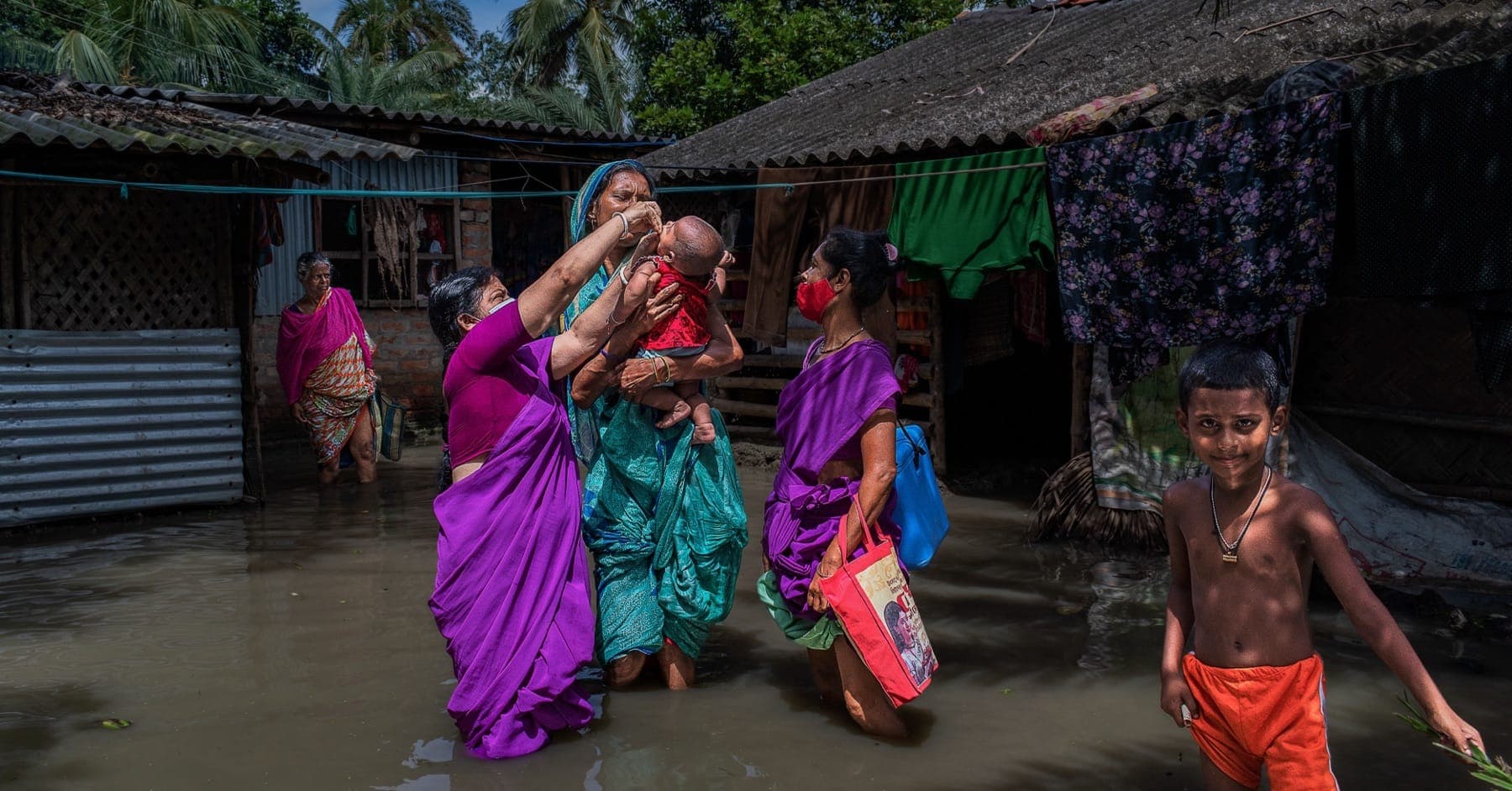
Same Climate Event, Different Financial Loss: Why Climate Impact Is Not Equal for Everyone
In 2025, India's southwest monsoon rainfall was 8% above normal — and it was also the year's deadliest climate disaster globally, per Christian Aid's Counting the Cost 2025 report.
But "above-normal rainfall" describes weather, not loss. A textile MSME in Surat and a pharma company in Mumbai both saw flooding. One shut for two weeks; the other filed insurance and recovered in days. Same rain, very different financial outcomes.
Climate events hit India's farmers, gig workers and MSMEs hardest. Here is how climate insurance for emerging markets can offer fast, fair financial protection.
Written byAnkur IndrakushFounder & CPTO

How climate risk falls unevenly
India saw extreme weather on 99% of days in the first nine months of 2025, and climate disasters cost an estimated $12 billion that year. That impact is not distributed evenly:
- Gig workers: a Greenpeace India study (May 2025) found that for every 1°C rise in temperature, informal workers' earnings fall by up to 19%; during peak heatwaves, income can drop by 40%. They have no paid leave, no employer coverage, no savings buffer.
- MSMEs: Cyclone Michaung (December 2023) damaged 4,800 MSME units across 24 industrial estates in Tamil Nadu. MSMEs contribute 29% of India's GDP and employ over 110 million workers — a single climate shock can wipe out months of revenue.
- Lenders and MFIs: agriculture and allied activities account for 60% of MFI loan portfolios, all directly climate-exposed.
Traditional insurance rarely reaches these groups — claims take months, surveys are expensive, and conditions are hard to meet without documentation. Microinsurance for climate shocks is emerging as a faster, more accessible alternative.
Understanding climate insurance for emerging markets
Parametric insurance asks "did the trigger event occur?" rather than "how much did you lose?" Think of it like a smoke detector: if smoke crosses a threshold, the alarm sounds automatically. If rainfall in a district falls below a set level or a heatwave index crosses a defined threshold, a payout is released — no surveyor visits, no claim forms. The trigger is always a measurable, independent data point, typically from IMD or ERA5: if X happens, Y rupees are paid.
How it works for farmers, gig workers, and MSMEs
- A vegetable farmer in Maharashtra: if June rainfall falls more than 30% below the district's historical average, a fixed payout is released within 72 hours — no need to document crop failure.
- A garment MSME in West Bengal: if flood water at a specified IMD gauge crosses a threshold for more than 48 hours, a business-interruption payment is released.
- A gig worker in Delhi: if ERA5 data indicates a severe heatwave lasting three or more consecutive days, the insured benefit is paid automatically.
No one has to prove individual loss — the payout is made against the data.
What changes in practice
The biggest change is speed. PMFBY has faced consistent criticism for delayed payouts, with farmers often waiting months. Because no assessment is needed, parametric payouts can arrive within ~24 hours of a trigger. For lenders, borrowers with parametric coverage recover faster and are increasingly viewed as more creditworthy — the RBI is actively developing a climate risk framework for banks and NBFCs.
Where this falls short
The biggest limitation is basis risk — the gap between what the trigger says and what actually occurred. A farmer may suffer loss in a localised dry spell, but if the district IMD station records sufficient rainfall, the trigger is not met. Other limitations: triggers must be designed carefully, and data availability varies in poorly monitored areas. These are solvable, but require designers and regulators to take them seriously.
Wrapping up
A heatwave that means discomfort for one person means zero income for another. Parametric insurance does not eliminate climate risk, but it closes the time gap between loss and recovery. For people with no savings buffer, fast payouts are often the difference between recovery and collapse.
00 Comments
Start the conversation
Be the first reader to share a thoughtful response.
Leave a Reply
Your email address will not be published. All comments are reviewed before appearing publicly.