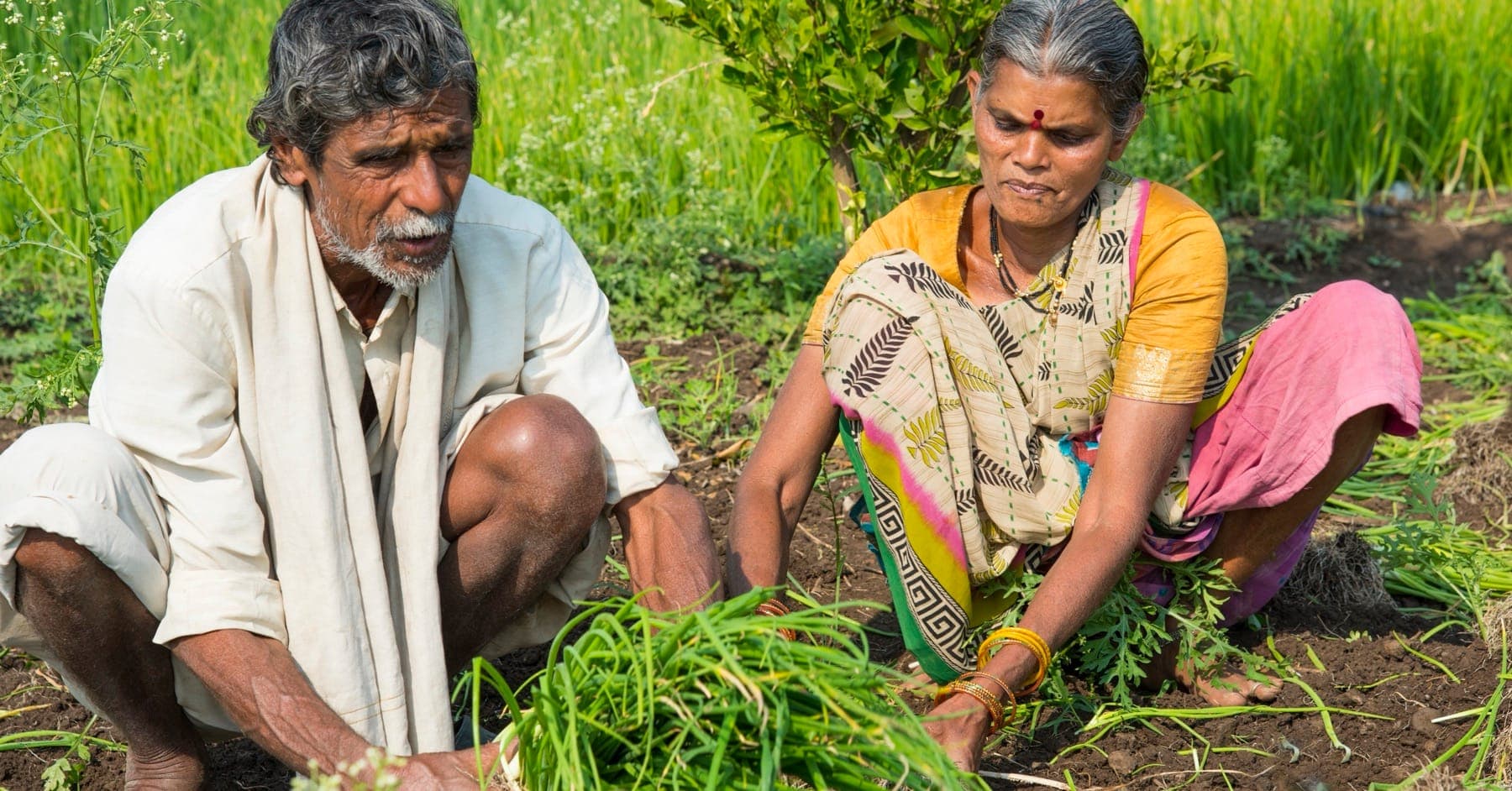
Parametric Weather Insurance for Farmers and Gig Workers: Fast Payouts When Climate Shocks Hit
In 2025, 68% of India's cultivated land was vulnerable to drought, and during the monsoon more than 1.58 lakh hectares across 13 states suffered crop damage. Heat stress, meanwhile, caused informal workers to lose up to 40% of their incomes during peak summer months. For farmers and gig workers, these events are the new normal — and traditional insurance was not built for this pace of disruption.
Learn how parametric insurance for agriculture and gig worker climate insurance works in India — fast payouts triggered by weather data, no paperwork needed.
Written byReecha SinhaVice President

The problem: climate shocks hit hardest where protection is weakest
India has roughly 7.7 million gig workers today, a number expected to reach 23.5 million by 2030. Most work outdoors with no paid sick leave and no savings buffer. For every 1°C rise in temperature, informal workers can lose up to 19% of their earnings. In Bengaluru, delivery riders completing 20–25 orders on normal days dropped below 15 on extreme-heat days.
Gig workers often spend 10–12 hours a day in temperatures above 40°C, with limited access to water, washrooms, paid leave, or health insurance. While they lose out on payments, farmers wait weeks — if not months — for financial aid.
Where parametric insurance comes in
Parametric insurance replaces the traditional loss-assessment process with a simple rule: if a measurable weather event crosses a pre-agreed threshold, the payout is automatic.
Think of it like a rain gauge connected to your bank account. You and the insurer agree in advance that if rainfall in your district falls below 60 mm in June, you receive ₹5,000. When that threshold is crossed there is no surveyor visit, no paperwork, no waiting. The data comes from IMD (rainfall) and ERA5 (heat), which act as the sole triggers — there is no dispute about whether a loss occurred, because the weather record is the only proof needed.
How it works for farmers and gig workers
A drought product might use IMD rainfall data for a district: if June monsoon rainfall in Latur, Maharashtra, drops below a set threshold, all enrolled farmers receive a fixed payment within days — linked only to the weather trigger, not individual loss.
A real-world illustration: SEWA's parametric microinsurance for informal women workers triggers payouts when temperatures exceed 40°C. At the lower threshold, each member receives ₹400 directly to her mobile-linked account; when temperatures cross 41.6°C–46.1°C for two consecutive days, larger payouts trigger automatically. A delivery rider on a heat-based product receives a cash transfer when the daily maximum crosses 42°C for five consecutive days — piloted in Delhi, Noida, Ghaziabad, Faridabad, Gurgaon, and Lucknow in May 2025.
What changes in practice
PMFBY aims to settle claims within two months of harvest; in practice, many farmers wait weeks. Parametric payouts can arrive within days of a trigger. SEWA's 225,000 members across seven states received collective payouts of over ₹2.3 crore in a single heat season in 2025. When a heatwave hits, a family does not have weeks to wait — they need cash for water, medicine, or replanting immediately.
| Insurance Type | Typical Trigger | Payout Timeline |
|---|---|---|
| PMFBY (crop, traditional) | Crop loss verified by surveyor | 15–60 days after assessment |
| Parametric (heat, crop, rainfall) | Weather threshold crossed | 2–7 days |
| Ad hoc government relief | Disaster declared | Weeks to months |
What parametric insurance cannot do
The most important limitation is basis risk — the gap between what the weather data says and what happened on the ground. If the monsoon recorded 65 mm in your district but your field received only 20 mm, the trigger may not be met even though your crop failed. Weather stations are also unevenly distributed; in remote regions the nearest station may be far away.
Other constraints:
- Parametric products are still not widely available across all states.
- Premiums may be higher than subsidised schemes like PMFBY for some farmers.
- Payouts are fixed — if your actual loss is much larger, the gap is yours to absorb.
- Many products still rely on philanthropic or government subsidy funding.
Parametric insurance works best as a first-response financial tool, not a complete replacement for all other support.
Where it is headed
India's parametric insurance market is projected to grow at 11.3% annually through 2028. With the National Adaptation Plan prioritising climate resilience and schemes like SEWA's already reaching hundreds of thousands of workers, the conditions for wider adoption are taking shape.
00 Comments
Start the conversation
Be the first reader to share a thoughtful response.
Leave a Reply
Your email address will not be published. All comments are reviewed before appearing publicly.